
What do you mean by Renaissance?
Contents
Renaissance means “The Revival or Rebirth”.
Unprecedented awakening and enlightenment have been associated with many inventions. It was a transition from the primitive to the modern! It also saw the resurgence of the old Greek and Latin literature and a new zeal could be seen for education, arts, crafts and philosophy.
All this resulted in many inventions and new age discoveries. The period ranging from AD 1300 to AD 1600 marks the invention in the field of science and technology and subsequently led to many changes in the lives of the people.
Here are a few inventions of the Renaissance Era that changed the course and destiny of mankind
The invention of the Steam Engine
The idea of a steam engine was introduced by a Greek Mathematician named Hero of Alexandria in the 1st century. Elementary Steam Engines were made from the 16th Century and Thomas Savery developed the first water pump powered by steam. In 1698. he constructed a Steam Engine which was called The Fire Engine.
This helped in the Industrial Revolution.

Discovery of the Printing Press
The most important invention was the Printing Press in 1436. Johannes Guttenberg developed the First Printing Press.
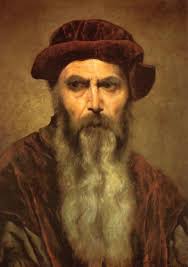
Printing Press led to an unprecedented spread of knowledge and a new interest in reading.

The Invention of the Printing Press led to Literacy and the Development of Education because people wanted to read the newly printed books. This led to the growth of Rationalism and Positive Outlook. It led to the spread of vast knowledge and culture.
Invention of Telescope
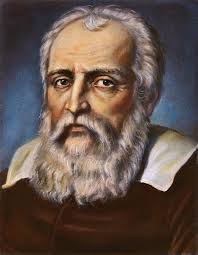
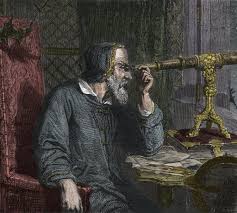
The Telescope was invented by Galileo Galilei. When Galileo came to know that a Dutch lens maker was making a magnifier, he started to work on it himself. In 1609, he became the first person to invent the telescope. This was used to observe heavenly objects.
Mechanical Clock Invented
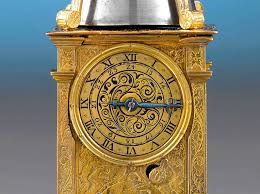
One of the most important inventions was the Mechanical Clock. In the earlier mechanical clocks, mercury was allowed to pass through the holes to reach the drums to show time. Filippo Brunelleschi in Florence, Italy, invented mechanical clocks in 1410.
Magnetic Compass
Another important invention was the Magnetic Compass which helped in the growth of Civilization. Though the Magnetic compass was invented by the Chinese, it was developed during the Renaissance age.

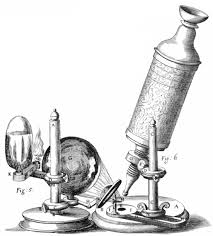
Microscope
Hans Janssen and Zacharias Janssen hold the name for the invention of the microscope. Both were also interested in making the lens. The first compound microscope is considered to be developed around 1590.
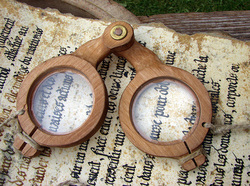
Eye Glasses
During the Renaissance Era, the eyeglasses were invented by Salvino D’Amate who lived in Florence. During the experiments, he injured his own eyes. He invented the eyeglasses and used to cure his own eyes.
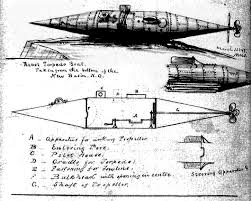
Submarines
Leonardo Da Vinci developed the idea of a submarine. He was a great inventor and scientist and put forward many inventions. Later, Cornelius Van Drebbel took up the task and constructed a submarine. He successfully constructed the submarine. He operated the machine at a depth between 12 to 15 feet under water.
Artillery
In 1805 AD Royal Arsenal ( British armed force’s research and development centre) showed the use of rockets by test firing them.
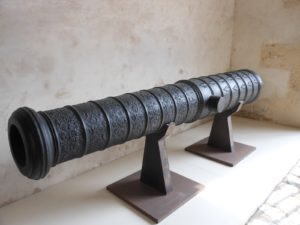
William Congreve made use of launching tubes to improve the accuracy of the rockets.
Matches
The modern matches were developed as a result of experimentation in 1827 by John Walker. He was an English chemist and apothecary. He used antimony sulfide, potassium chloride, gum and starch to make the first friction matches. This was called Johny Walker’s Friction Light
Flush Toilets
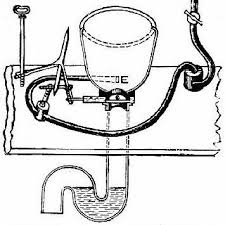
The credit of inventing the flush toilets goes to John Harrington. Queen Elizabeth got interested in its working model and got it constructed in her palace.
So, we see many of the modern day inventions owes its origin and use to the Renaissance Era. No doubt it is also called the ‘Age of Enlightenment’.