
What was the Wyatt Rebellion?
Contents
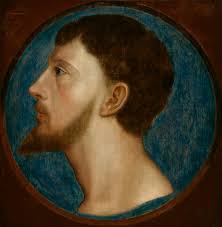
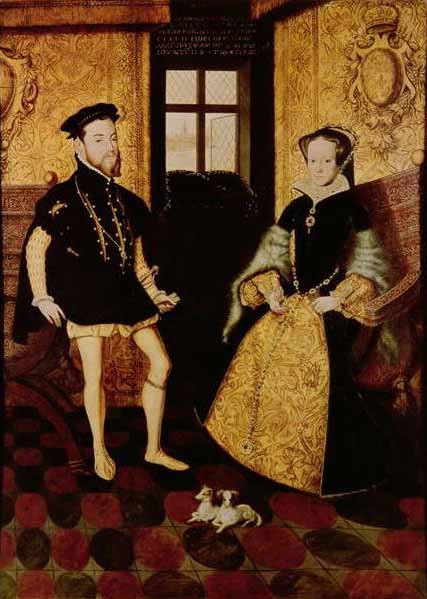
Wyatt’s Rebellion initiated by Sir Thomas Wyatt in 1554 will be forever marked as one of the most important political conspiracies in English history. Wyatt, a young rebel among many other Kent rebels, marched to London with the aim of stopping Mary Tudor’s marriage with Prince Philip II of Spain.
The secondary aim of replacing Mary with her half-sister Elizabeth was never openly declared.
What caused the Wyatt rebellion?
In 1554, the Wyatt Rebellion was out of fear of England turning re-Catholicised. Another reason was the proposed marriage of Philip of Spain and Mary.
When was the Wyatt Rebellion?
The Wyatt rebellion happened in 1554.
Who led the rebellion which Mary crushed in 1554?
The rebellion led by Sir Thomas Wyatt was crushed by Mary.
Thomas Wyatt was a brave soldier and an excellent leader but he was also known for his recklessness and short temper. Henry Grey, Duke of Suffolk, Sir Peter Carew and Edward Courtenay, the Earl of Devon were some of his fellow conspirators in the revolt of 1554.
The Reason behind Wyatt’s Rebellion
Causes of the Wyatt Rebellion –
The reason behind Wyatt’s rebellion was considered to be political, economic as well as religious.
During Mary Tudor’s reign, there was turmoil between the religious views of Catholicism and Protestantism.
Mary was a devout Catholic and she wanted to reinforce Catholicism in full fledge during her reign. In the act of doing so, she had prosecuted and killed over 300 protesters. Her gruesome punishments for heresy made her quite unpopular among the protestants.
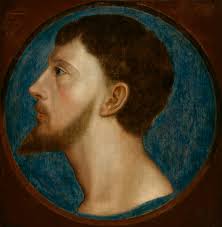
Mary wanted to foster Catholic faith and in order to do so, she had to produce Catholic heirs to the throne. After prolonged discussions, Mary accepted the marriage proposal of Phillip II of Spain.
As soon as the marriage alliance was announced the Protestants feared for their sovereignty and the undue influence that Spain, a foreign country will have over England.
When Mary was coronated as the Queen in 1553, she had appointed many of her favourite Catholics in high-ranking government posts and in the Privy Council.
People feared that Mary’s proposed marriage to Philip of Spain would pose a threat to the freedom of England and the Spaniards would now take over the House of Commons.
Moreover, there were economic factors involved as well especially around the Kent area of England. There was severe unemployment and the textile industry in Kent was not doing well. This might also have provoked Wyatt as a reason to plan the revolt.
The Planning of Wyatt’s Rebellion
The main idea was to stop the Spanish marriage and also there were probably reasons to believe that Wyatt wanted to crown Elizabeth as the future Queen of England.
Wyatt was the mastermind and he started gathering armed forces along with his fellow conspirators including Edward Courtenay, who was once rejected for marriage by Mary Tudor.
Edward Courtenay later will prove to be one of the reasons for the failure of the revolt.
The plan was to attack the Country from three sides, Midland, West Country, and Kent. It was supposed to be a surprise attack and Wyatt hoped to gather more forces to his mutiny.
Was the Wyatt Rebellion a threat?
Wyatt’s rebellion aimed at changing the policies of the state and not just change the regime. Wyatt’s plan was to prevent Mary’s marriage with Philip II. Wyatt, therefore, advised that Mary should listen to her advisors and counsels than get married into a Spanish state.
Mary’s marriage, for political reasons, was thus, even more feared by the likes of Tomas Wyatt that the Catholocism of the country.
Reasons for Failure of Wyatt’s Rebellion
The rebellion failed miserably. One of the reasons been the poor planning of the mutiny. Wyatt was underprepared and was oblivious of the fact that the rumours of his devious plan have already reached the loyal officers of Mary.
Simon Renard, the Imperial Ambassador informed Lord Chancellor Stephen Gardner of the probable raising of the mutiny.
Gardner brought Courtenay and questioned him. Courtenay was not a man of will and he broke down and revealed the plans.
Most of the people were loyal to England and the mutinies of Midlands and West Country failed miserably as they were unable to gather enough forces against the Queen.
The Rebellion Days
What happened in the Wyatt Rebellion?
Wyatt gathered an army of 4000 men in Kent and on 25th January started marching towards London.
Wyatt was confronted by the Duke of Norfolk but the army of 500 later fled in support of his cause. Wyatt had the faintest idea that he might actually succeed.
How long did the Wyatt rebellion last?
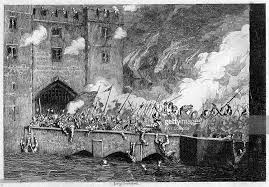
Wyatt reached the city on 3 February 1554 but the London Bridge was already destroyed. Wyatt tried to get into the city via Ludgate but the gate was heavily fortified.
The troop was then forced to head towards Temple Bar where Mary was waiting with her troops. This was a trap and soon Wyatt was defeated and captured.
Death of Thomas Wyatt
When did Wyatt’s rebellion end?
Wyatt along with his fellow soldiers was sent to the Tower of London. Wyatt, William Thomas who was a rebel leader and 90 other rebels were tried and executed at Westminster Hall.
Thomas Wyatt died on April 11, 1554, in London. The other minor nobles were charged for the act of treason but exempted of the death penalty.
Consequences of the Wyatt Rebellion
- Thomas Wyatt was executed along with 300 other rebels.
- Elizabeth Tudor was taken under imprisonment with charges of conspiracy.
- Lady Jane Grey was executed.
- The Parliament decided that if Philip became king, his powers would be reduced.
The Aftermath
Mary Tudor was lenient towards some of the rebellions and they were exempted as she wanted to raise her status in the eyes of her people.
Elizabeth, who was a threat to her throne remained imprisoned in the Tower but her role in the conspiracy was never established.
Courtenay was exiled. Lady Jane Grey and her husband Guildford Dudley were executed. They were not directly involved in the rebellion, but Jane’s father the Duke of Suffolk was part of the mutiny.