
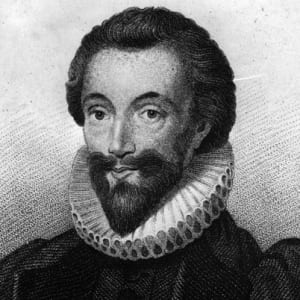
John Donne has his name engraved among the best artists of English and also at the Metaphysical school.
It was after his death his two versions of ballads were made public and appreciated in 1633 and 1635. The ones who followed his work and had maintained it for so long kept working upon the thoughts that John Donne must have had with a combination of his enthusiasm and emotional perspective as well which gave his words the significance that is fresh till date.
He also tried writing lyrics, expositions and poems as well.
John Donne’s reputation as a great English poet, and one of the greatest writers of English prose, has been cemented in the history of literature through his exquisite and unique writing style. He was one of the great metaphysicals; the one that cemented the reputation of poetry into critical favour, poetry which had earlier been termed as crude.
Donne: Personal Life and Education
Contents
Donne, the son of a wealthy merchant, was born in London. His parents were Roman Catholics, and he was educated in their faith before going on to Oxford and Cambridge. He entered the Inns of Court in 1592, and where he mingled wide reading with the life of a dissolute man-about-town.
In these years, he wrote his Satires, the Songs and Sonnets, and the Elegies, but, though widely circulated in manuscript, they were not published until 1633, after his death. Donne seemed ambitious for a worldly career, but this was ruined by a runaway marriage with the niece of his patron, after which he spent several years in suitorship of the great.
John Donne also had a sibling who got indicted for Catholic’s in 1593 and was arrested who died in the prison. This incident of loss of a sibling made John scrutinize his Catholic beliefs and became the motivation for a majority of his best composition on religion.
When he was 25 years old, he was serving as private secretary to Sir Thomas Egerton, the Lord Keeper of the Great Seal of England. This continued for a significant amount of time and then Donne had devoted himself to Anglicanism.
In 1615, he entered the Anglican Church, after a severe, personal struggle, and in 1621, became the Dean of St Paul’s, which position he held until his death in 1633.
Life and Career of John Donne
Later on his prosperous path of growth, he became Member of Parliament in the year 1601. The same year he fell for a young girl of age 16 named Anne More who was related to Sir Egerton. Their relationship was defied by both, Lord Egerton and Anne’s father as well but they two got married anyway without any dowry from the girl’s father.
John Donne was then removed from his post under his Master and the following eight years had been tough on the couple until Anne’s father finally agreed to provide his daughter dowry and make her life easier.
Then in the year 1610, John Donne managed to win the confidence of the ruler and even got supported by the House of Lords. All this was managed by his writing of ‘Pseudo-Martyr’. In this, he wrote how the Roman Catholics can strengthen James I without getting in the eyes of the pope.
Poetry and Verse
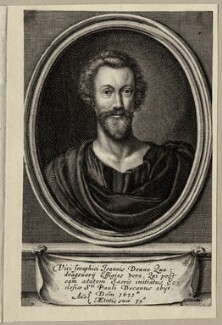
Donne was the most independent of the Elizabethan poets and revolted against the easy, fluent style, stock imagery, and pastoral conventions of the followers of Spenser. He aimed at the reality of thought and vividness of expression. His poetry is forceful, vigorous, and, in spite of faults of rhythm, often strangely harmonious.
His cynical nature and keenly critical mind led him to write satires, such as Of the Progres of Soule (1601). They were written in the couplet form, later to be adopted by Dryden and then by Pope, and show clearly, often coarsely and crudely, Donne’s dissatisfaction with the world around them.
His love poems, the Songs and Sonnets, were written in the same period, and are intense and subtle analysis of all the moods of a lover, expressed in vivid and startling language, which is colloquial rather than conventional. A vein of satire runs through these too. The rhythm is dramatic and gives the illusion of excited talk.
He avoids the smooth and easy patterns of most of his contemporaries, preferring to arrest attention rather than to lull the senses. His great variety of pace, his fondness for echoing sounds, his deliberate use of shortened lines and unusual stress contribute to this effect of vivid speech, swift thought and delicate emotional responses. He is essentially a psychological poet whose primary concern is feeling.
His poems are all intensely personal and reaeal a powerful and complex being. Among the bets known and most typical of the poems in this group are Aire and Angels, A Nocturnall Upon S.Lucies Day, A Valediction: Forbidding Mourning, and the Extasie.
Donne’s religious poetry was written after 1610, and the greatest, the nineteen Holy Sonets, and the lyrics such as A Hymn to God the Father, after his wife’s death in 1617. They too are intense and personal, and have a force unique in this class of literature.
They reveal the struggle in his mind before taking orders in the Anglican Church, the horror of Death, and the fascination which it had for him, his dread of the wrath of God, and his longing for God’s love. They are the expressions of a deep and troubled soul. In them are found the intellectual subtlety, the scholastic learning, and the wit and conceits of the love poems.
The poetry of Donne is highly philosophical, a subtlety of reasoning, a blend of thought and devotion, a mingling of the homely and the sublime, the light and the serious, which make it full of variety and surprise. It is to these many characteristics, so widely differing yet often brought together in a startling fusion, that the general term, ‘wit’ is applied.
Probably the most distinctive feature of the poetry of Donne is his imagery, which is almost invariably unusual and striking, often breath taking, slightly far fetched but fantastic. From his wide range of knowledge, he draws many remarkable comparisons; parted lovers are like the legs of the pair of a compass, love is like a spider and his sick body is a map.
John Donne and Poetry
It is a tough task to date the works of John Donne exactly to when they were written as they were never published while he was alive. Majority of his works have been maintained by his followers by means of copies of the original work. However, the mottos, parodies, stanza letters and requiems have been traced back to 1590s.
The famous works of ‘Blessed Sonnets’ and other different religious ones were date back to be written between the 1590s to 1617. He began writing lyrics and others very late in his lifetime, which is said to be around 1620s.
Even his initial parodies and funeral poems, which get from established Latin models, contain variants of his examinations with structure, class and symbolism. Donne’s verse is set apart by strikingly unique takeoffs from the traditions of sixteenth-century English stanza, especially that of Sir Philip Sidney and Edmund Spenser.
Lyrical works of John Donne
John Donne has done remarkable work when it comes to love verses and are said to be his fundamental works when he began to write initially.
He kept on using Petrarchan phrases of Renaissance love verses and ended up writing them into forms of satire where men imagine themselves as phantom frequenting the unfaithful women.
Donne’s love-related verses gave sharp mental understandings about a wide scope of lovers and a wide range of affectionate emotions.
Prose
The prose work of Donne is considerable both in bulk and achievement. The Pseudo-Martyr(1610) was a defence of all oath of allegiance, while Ignatius His Conclave(1611) was a satire upon Ignatius Loyola and the Jesuits.
The best introduction to Donne’s prose is, however, through his Devotions(1614), which gave an account of his spiritual struggles during a serious illness. They have many qualities of his poetry, are directly personal, reveal a keen psychological insight, and the preoccupation with death and his own sinfulness which is also to be seen in the Holy Sonnets.
The strong power of his imagination and mask of learning, which are features of the work, cannot hide the basic underlying simplicity of Donne’s faith and his longing for rest in God. His finest prose works are his Sermons, which number about 160.
In 17th century England, the sermon was a most important influence, and the powerful preacher in London was a public figure capable of wielding great power. Donne’s sermons, of which the finest is probably Death’s Duell(1630), contain many of the regular features of his poetry. Intensely personal, their appeal is primarily emotional, and Donne seems to have used a dramatic technique which had a great hold on his audience.
They reveal the same sort of imagery, the same unusual wit, the keen analytical mind, and the preoccupation with morbid themes which exist in his poetry, and they are full of the same out-of-the-way learning.
Although Donne was far too much of an individual for any succeeding poet to resemble him very closely, his influence is strongly felt in both the courtly and religious poetry of the same generation, and the metaphysical school embraces many renowned names.
Holy Sonnets: Batter my heart, three-person’d God
Death of John Donne
Donne was declared dead on March 31st of 1631 and was made to rest in St Paul’s Cathedral. At his resting place, a statue had been raised by Sir Nicholas Stone commemorating him in Latin epigraph most likely made independent from anyone else.