
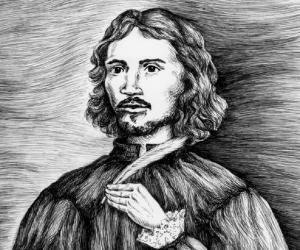
Thomas Tallis was born in Kent, England on January 30th 1505. He was a famous British composer and organist. He was one of the most brilliant composers of his time. He was a very famous Renaissance composer. Though much is not known about his childhood and early life, he is regarded as one of the most famous.
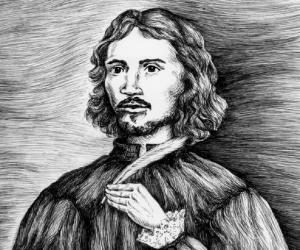
He lent his services to the British Court for a big period which lasted during the reign of four different monarchs. He is one of the most admired and revered composers of Sacred Music in England before William Byrd. He was influenced by both Reformation style music and Continental Polyphonic schools.
Thomas Tallis’s Music
Tallis was born as a Catholic. His faith influenced his compositions because initially, he showed a liking for Latin Texts and Polyphony. These were based on the Catholic Liturgical Music style.
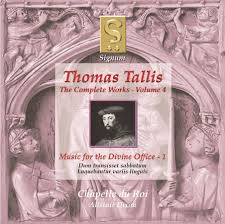
In Rome, King Henry VIII, broke with Rome, this affected music as the worship in England changed to Anglican. There was a shift from Catholic to Anglican and the music also underwent a drastic change to fit the Anglican liturgy. Tallis is known for his adaptability because he survived the change.
He then adopted a more homophonic style. Homophony is a single melody supported by harmony. These were beautiful and scared hymns and anthems. For example, Glory to Thee, My God This Night is very popular and has been loved for centuries. These have remained in hymnbooks and is famously called The Tallis Canons.
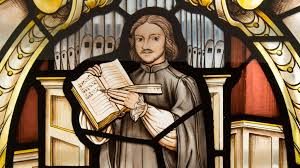
Thomas Tallis: Granted Monopoly Rights to Publish
Along with William Byrd, Tallis gained the monopoly to publish vocal music. On January 21st Queen Elizabeth granted them the monopoly for Printing Music Paper in England. This was for the first time letters patent were issued for its purpose.
The first publication that was made under this license consisted of 34 motets, 17 by Tallis and 17 by Byrd. This was entitled as Cantiones Sacrae.
These latin pieces with the five anthems printed by Protestant printer John Day in his work name Certain Notes are all the printed music Tallis saw during his life. Tallis’s Latin Works comprise of an unnamed four-part mass; a five-part mass, a seven-part mass and two settings of the Magnificat. He also made two settings of the lamentation of the Jeremiah.
Achievements of Thomas Tallis
His latin pieces are considered as some of his best masterpieces and work of counterpoint. In fact, the seven-part miserere nostri is an extraordinary canonic writing and the famous forty part is a unique work in English music.
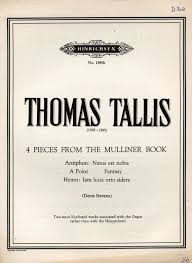
Tallis was one of the pioneers to provide settings for the English Liturgy. He wrote about preces and responses, the litany and complete service in the Dorian mode and style. This comprised of the morning and the evening canticles and the communion service. He also wrote a number prayers, psalms and sacred anthems. Tallis’s work on keyboard music is very substantial and significant. Of his 20 keyboard pieces, most of them appear in the mid-16th-century manuscript by the name Mulliner Book.
During his time, there was a great political disturbance and the differences between Catholicism and Protestantism could be seen in his music as well.
Tallis kept himself away from the changing political and religious scene of the time. However, he could not control its effect on his compositions.
Tallis Scholars
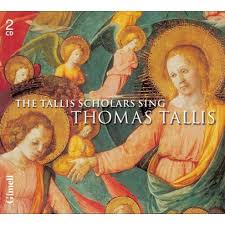
Tallis’s works have lived in the 21st century because of the groups known as Tallis Scholars who performed and recorded music of the Renaissance.
The English Psalm Why Fumeth in Night published in 1567 inspired the British Composer Ralph Vaughan Williams who used the psalm in his orchestra work ‘Fantasia on a theme of Thomas Tallis in 1910’.
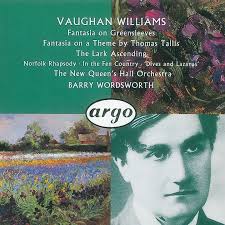
This was in practicality the revival and rebirth of Tallis’s work.