

The rote is a box like a string instrument. It is also called a crwth or a crowd. The rote is associated with Welsh music and Medieval English Folk music. According to records, the rote been dated since the 11th century.
The rote is also known as a crwth. The name is originated from an ancient Celtic noun, krotto, which describes a swelling or bulging appearance. In medieval Latin, it was called chorus or crotta.
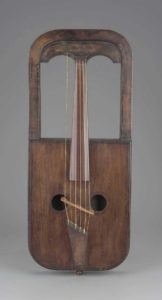
During the Roman times, a wide variety of string instruments were designed in Wales and the rote was one of them. It belonged to the lyre class of instruments. This instrument is weaker than many other string instruments due to the softness of the wood it is made out of.
It was one of the most popular musical instruments to be played by Welsh, especially for the aristocracy. It was played by minstrels for the entertainment of the upper class.
The body of the Musical Instrument rote
Initially, the rote’s arms which were attached to the body had more than eight strings. however, with the structure evolved, the number of string reduced to three or four. IT slowly became a guitar.
The rote was a box with a fingerboard and six gut strings. The box and the bridge were usually made of different types of wood. The latter was made of a fruitwood.
The soundholes in the in the sound box are circular and are around an inch apart. In the rote, one leg of the bridge runs through a sound hole and is placed in the back of the instrument. This is done to take away some of the downward pressure of the strings on the wood of the bridge.
When playing the rote, it is positioned with its lower end against the chest of the player. The rote gives out a soft sound, but rougher than that of a violin.